Motorsport Engineering

Race car development, from concept to homologation.

From a focused specialist package to a complete vehicle-development programme. RacingSyn combines complete-vehicle engineering experience with specialist expertise across WRC and Rally, Rally Raid and Dakar, GT and endurance racing.

A World Rally Car airborne over a crest on a gravel road through an autumn forest

Why experience matters

The most expensive mistakes are made early.

The wrong technical concept. A development direction chosen before the numbers are understood. A regulation interpreted too late. By the time the prototype is testing, those decisions are already built into the car.

RacingSyn brings experience from programmes where architecture, performance, reliability and homologation have to converge from the beginning.

The value of experience is simple: lessons already learned do not have to be learned again at your expense.

The motorsport development process

From specification to competition.

A successful motorsport programme is a sequence of connected engineering decisions. Architecture, simulation, design, testing and development must continuously inform each other from the first specification to competition.

  1. 01

    Specification & Targets

  2. 02

    Regulations & Architecture

  3. 03

    Load Cases & Simulation

  4. 04

    Design & CAE

  5. 05

    Prototype / First Build

  6. 06

    Rig, Track & Terrain Testing

  7. 07

    Correlation & Development Loops

  8. 08

    Validation & Homologation

  9. 09

    Competition Support

Motorsport programmes

Different competitions. The same complete-vehicle thinking.

RacingSyn can support a clean-sheet competition vehicle, the development of an existing car, or a focused technical package. The scope changes; the engineering approach does not.

A World Rally Car drifting through snow between fir trees, wheels and snow spray in view

01

WRC & Rally

RacingSyn's deepest motorsport experience comes from rally. Complete vehicle architecture, suspension, lightweight structures, vehicle dynamics, testing and FIA homologation can be integrated into a full programme or delivered as focused technical packages.

The Alliance brings experience from WRC programmes including Toyota, Hyundai, M-Sport Ford, Subaru / Prodrive and Mitsubishi Ralliart, together with direct experience of FIA Rally Technical Working Groups.

  • Complete rally car development
  • Suspension architecture & kinematics
  • Vehicle dynamics
  • Composite & lightweight structures
  • Testing & development
  • FIA regulations & homologation
A rally raid car cresting a sand dune, its shadow stretched across the desert

02

Rally Raid & Dakar

Performance and reliability. Engineered together.

A fast Rally Raid car that does not finish is not a fast car. Long stages over rocks, dunes, repeated impacts, dust and heat make suspension loads, structural durability, cooling, vehicle dynamics, reliability and serviceability part of the same engineering problem.

  1. 01

    Suspension loads & wheel impacts

    Long travel, high damper velocities, landings, rocks and potholes create repeated multi-directional loads. Suspension members, uprights, wheel assemblies, chassis pick-up points and the structure behind them have to be developed as one load path.

  2. 02

    Structural durability & fatigue

    Rally Raid is not only about surviving a peak load. The vehicle must withstand thousands of kilometres of repeated rough-terrain loading, with fatigue, stiffness and weight balanced from the beginning.

  3. 03

    Cooling & thermal management

    Dust, sand, low-speed sections and high ambient temperatures create severe cooling conditions. Radiator sizing, ducting, airflow, filtration and thermal protection optimization must work together in the real event environment.

  4. 04

    Vehicle dynamics across changing terrain

    The same vehicle must remain controllable and efficient over fast gravel, rocks, dunes, jumps and broken terrain. Suspension geometry, damping, ride heights, vehicle balance have to work across a much wider operating window than a circuit car.

  5. 05

    Reliability & serviceability

    Components must not only survive; they must be inspectable, repairable and replaceable quickly during an event. Access, protection, fastening strategy, spare-part commonality and service procedures are engineering decisions, not afterthoughts.

  6. 06

    Testing, correlation & development

    Rally Raid development is an iterative test-and-correlation process. Data from different terrains, component loads, temperatures, damper data and driver feedback are used together to validate the design, identify weaknesses and refine the vehicle before competition.

GT cars racing up the hill through Eau Rouge at Spa-Francorchamps

03

Circuit Racing

Top-level motorsport has shaped the way RacingSyn works: simulation, correlation, disciplined decision-making and rapid technical iteration.

Senior specialists within the Alliance bring experience across GT3, GT4, GT2, endurance and Formula 1 programmes. RacingSyn can support circuit racing from vehicle architecture and mechanical design to composites, aerodynamic integration, vehicle dynamics, testing and race engineering.

  • GT3 / GT4 / GT2 vehicle development
  • Endurance racing engineering
  • Vehicle architecture & mechanical design
  • Composite engineering
  • Aerodynamic integration
  • Vehicle dynamics & setup
  • Race & test engineering
Mechanics at work around a rally car in a snowy service area, beside a red cabin

Race & Test Engineering

Engineering that continues after the car leaves CAD.

RacingSyn engineers and specialists can support testing, development and competition directly with the customer's technical organisation, for a test session, a development programme, an event or a season.

  • Test engineering
  • Race engineering
  • Vehicle setup
  • Telemetry & data analysis
  • Driver feedback correlation
  • Reliability follow-up
  • Trackside technical support
  • Mechanics / event support where required

How RacingSyn supports the programme

Support scaled to the programme.

01

Scope & technical direction

Define championship, class, regulations, performance targets, budget and timing; identify the critical decisions and specialist expertise required.

02

Architecture & specialist mobilisation

Establish the vehicle architecture and system interfaces, then bring in the specialist disciplines required by the programme.

03

Engineering coordination & delivery

Coordinate design, CAE, suppliers and technical decisions so individual work packages converge into one coherent vehicle.

04

Test, development & homologation support

Support rig, track and event testing, correlation, reliability development and homologation through to competition.

FIA Regulations & Homologation

Homologation is engineering, not paperwork.

Regulations influence architecture, packaging, materials, dimensions and performance. Read at concept stage, they become design inputs. Read at prototype stage, they become redesigns.

RacingSyn brings practical homologation experience together with direct experience of FIA technical working groups.

Ways to engage RacingSyn

Three ways to work with RacingSyn.

01

Complete programme

Technical and programme leadership, architecture, design, build, testing and homologation of a new competition vehicle.

02

Specialist package

One technical discipline or system delivered by experienced specialists, for example suspension, composites, aerodynamics, cooling improvement, lightweight design optimization.

03

Integrated programme support

Senior engineers, test specialists and technical personnel working directly within the customer's development or competition programme.

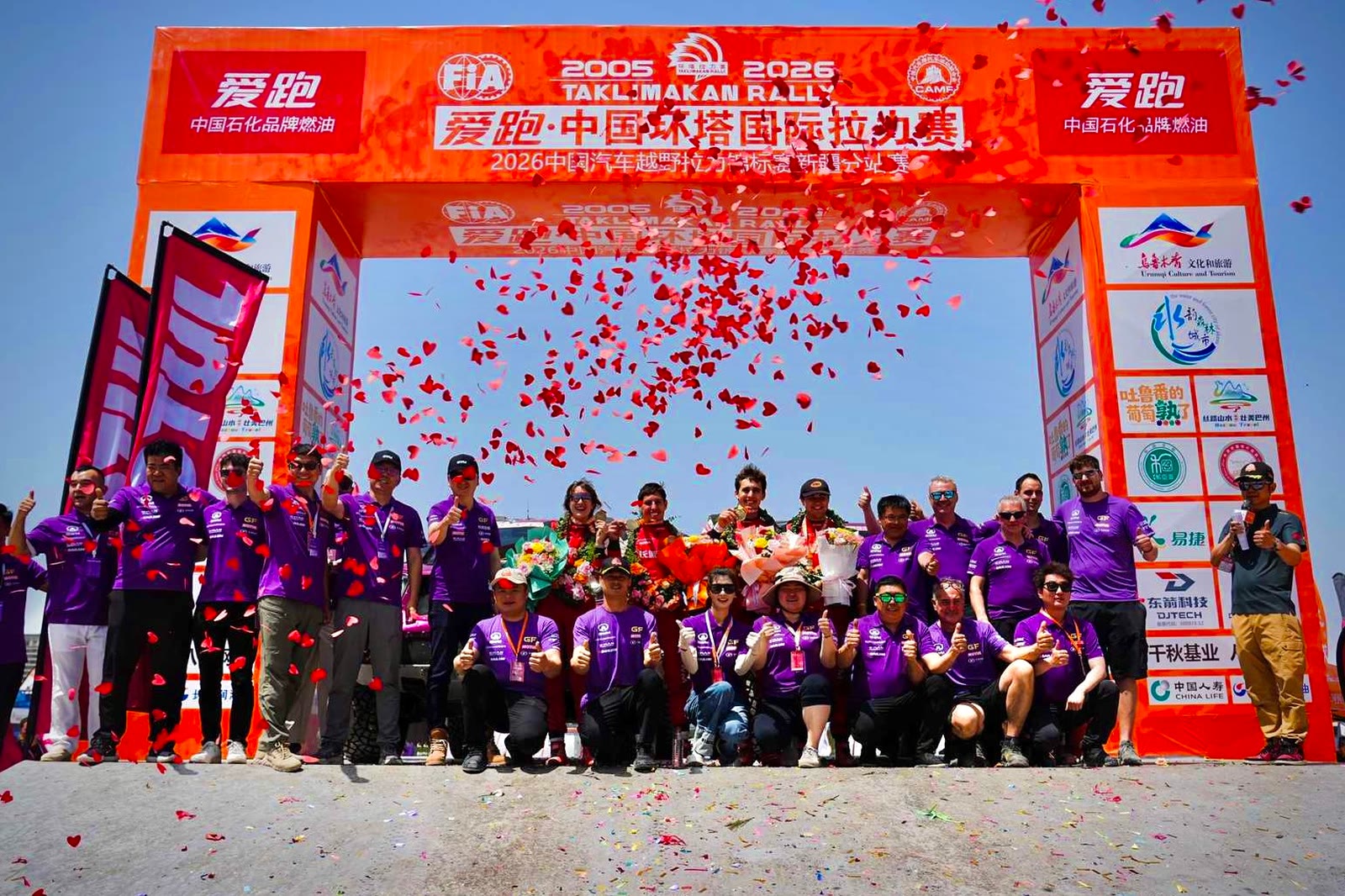
The GWM factory organisation celebrating on the finish podium of the 2026 Taklimakan Rally

Selected project

Great Wall Motor: Rally Raid Support at the 2026 Taklimakan Rally

Vehicle setup, data analysis, reliability follow-up and technical operations with the GWM factory organisation, through testing and competition. GWM won the T2.E category.

From the event9 photos

Questions

What constructors ask before they call.

How do we avoid committing to the wrong concept early?

By defining the architecture before committing to detailed design. We start with the regulations, performance & budget targets, loads, packaging, weight, reliability and programme constraints, then make the key concept decisions with people who have solved comparable problems before. That reduces the risk of discovering fundamental issues after the prototype exists.

Do you have experience in our specific discipline?

Rally is our deepest area, with experience in WRC design leadership, FIA technical working groups and Rally Raid programmes. Senior specialists within the Alliance also bring experience across GT, endurance and Formula 1. If a discipline or technical challenge sits outside our direct experience, we say so in the first conversation.

How do you stop reliability problems from appearing too late?

By treating reliability as an engineering target from the concept stage. Load cases, thermal conditions, fatigue, serviceability and failure modes are considered early, then correlated through rig, track and durability testing. The aim is to expose weaknesses during development, not during the event.

Can you handle FIA regulations and homologation?

Yes. FIA/SRO technical and homologation regulations are treated as engineering inputs from the architecture stage, not as a final paperwork exercise. RacingSyn's founder represented Toyota in FIA Rally Technical Working Groups for several years and led the design and development of several racing cars, bringing direct experience of both regulation interpretation and homologation strategy.

What does it cost?

The scope can range from a focused specialist package to a complete vehicle-development programme. Every engagement is scoped in writing before work starts, with defined responsibilities, deliverables, timing, resources and commercial terms.

Can RacingSyn support only one part of an existing programme?

Yes. RacingSyn can support a complete programme, but it can also provide one specialist or a focused technical package for an existing organisation, for example suspension development, vehicle dynamics, composites, CAE, cooling, testing or homologation.

Start

Planning a new motorsport programme?

A clean-sheet vehicle, an existing car or one technical system. Tell us the championship, target and timing, and we can discuss the engineering organisation the programme requires.